Adversarial thinking applied to business and technology.

I’m an entrepreneur with a background in offensive security, enterprise consulting, automation and AI. I look at how people and systems actually behave: questioning assumptions, testing edge cases and finding where better strategy or technology creates disproportionate leverage.

Today, most of my work sits around AI, automation and building better ways for businesses to operate.

Explore my work Get in touch

Scroll

Every system has a gap between design and reality.

Offensive security taught me to look for it.

  1. A control exists.But does it actually prevent the thing it was designed to prevent?

  2. A user is not supposed to reach something.But what happens if you approach it from another path?

  3. A process has always required six people.But is that still true?

That way of thinking has followed me well beyond cybersecurity.

How I think

  1. Question the constraint

    Before solving around a limitation, establish whether the limitation still exists.

  2. Understand the mechanics

    How a system is documented and how it behaves are not always the same thing. The second one matters more.

  3. Test the edge cases

    Normal paths tell you how something was designed. Edge cases often tell you how it actually works.

  4. Find leverage

    The goal is rarely more activity. It is finding the intervention that changes the outcome disproportionately.

Being adversarial does not mean being contrarian.

It means being willing to test the assumptions everyone else has stopped questioning.

Systems are only half of the equation.

I’m equally intrigued by human behaviour: what influences decisions, how framing changes perception, and why trust, authority or urgency can override even strong systems.

Sales Social engineering
Human behaviour
Marketing AI Management Business

The mindset is only useful if it produces results.

Tested against real systems.

Offensive security gave me a professional environment where assumptions had consequences. My work included enterprise consulting at EY across software, networks and real-world environments, with the objective of finding paths the system was never designed to allow.

projects
172
clients
42
findings
1,692
critical & high severity
130
Findings by severity

The most consequential findings often came from broken assumptions rather than obvious technical failures.

Business logic flaws
Making applications behave outside the rules their designers expected.
Access control bypasses
Reaching data, functions or privileges a user should never have been able to reach.
Human and physical weaknesses
Getting in through people or premises rather than software.

Applying the same thinking to business systems.

Selected examples of where I’ve used automation, AI and process redesign to change how an operation works.

AI-enabled sales system

calls in a peak month
~50,000
meetings per month
~400
operation supported
~$1M/month

A multi-channel lead engine that replaced inconsistent manual follow-up with near-immediate AI voice, CRM orchestration and automated booking.

View project

Link acquisition operating system

live within 30 days
2.5% →28.2%
of quality decisions automated
87%

A six-person manual workflow rebuilt around one full-time operator, a part-time manager and a custom platform handling most sourcing, vetting, outreach, negotiation and fulfilment.

View project

Different disciplines. The same underlying questions.

People

Sales · persuasion · social engineering

What actually drives the decision?

Systems

Offensive security · networks · APIs · software

What assumptions does the system depend on?

Distribution

SEO · outbound · direct response · marketing

What determines whether something gets seen, trusted and acted on?

Leverage

AI · automation · orchestration · process redesign

What still needs a person and what no longer does?

The disciplines changed. The instinct to understand the underlying mechanics did not.

What I’m working on

Co-founder

AI implementation, automation and business systems.

Paloren works with organisations to identify where AI can create meaningful operational leverage, redesign the underlying process and build what it takes to make it work in practice.

Visit Paloren

Independent

Selected projects

I continue to work on selected automation, technical and strategic projects where there is a sufficiently interesting operating problem to solve.

In progress

Writing

I’m currently co-authoring work on AI, organisational design and what happens when capability stops being directly tied to headcount.

Speaking & training

I’m available for selected talks, workshops and private training around the areas where my experience overlaps: adversarial thinking, AI implementation, automation, social engineering, human behaviour and the changing structure of work.

Speaking or training enquiry
  • Adversarial Thinking Beyond Cybersecurity

    How offensive-security thinking translates into strategy and business problem solving.

  • AI Without the Hype

    Where AI actually creates leverage, where deterministic systems are better, and how to design around both.

  • The Human Attack Surface

    What social engineering, persuasion and physical security reveal about how people make decisions.

Alex Agius on a balcony overlooking a racecourse at sunset
Amoudi Bay below the cliffs of Oia, Santorini
The Colosseum in Rome under a clear sky
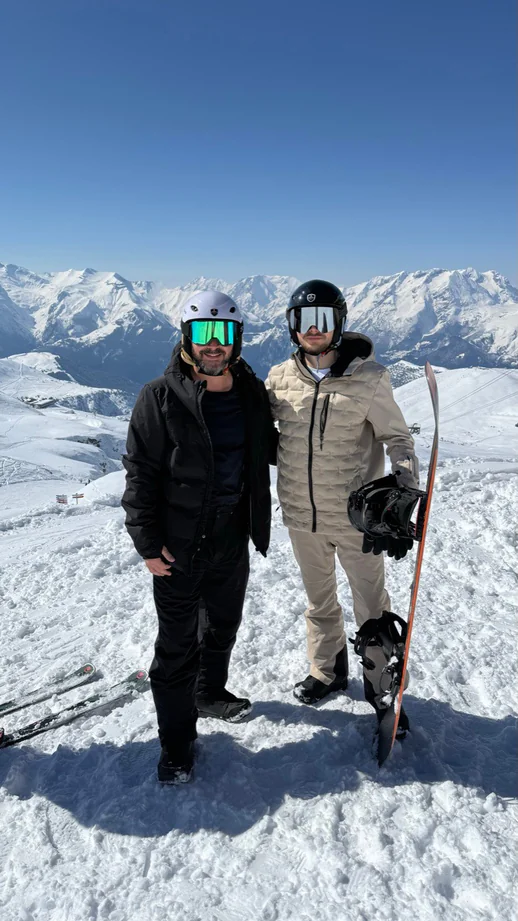
Alex Agius and a friend in ski gear on a snowy summit
Plaza de España in Seville at dusk

Outside the work

I’m Australian and have deliberately built my work around the freedom to operate internationally.

I’ve been interested in business for as long as I can remember, and when I’m not working I’m usually travelling, learning something new or building something simply because I want to understand it.

More about me

Working on something interesting?

I’m open to selected projects, advisory work, speaking and collaborations where AI, automation or better system design can materially change how a business operates.

contact@alexpagius.com